
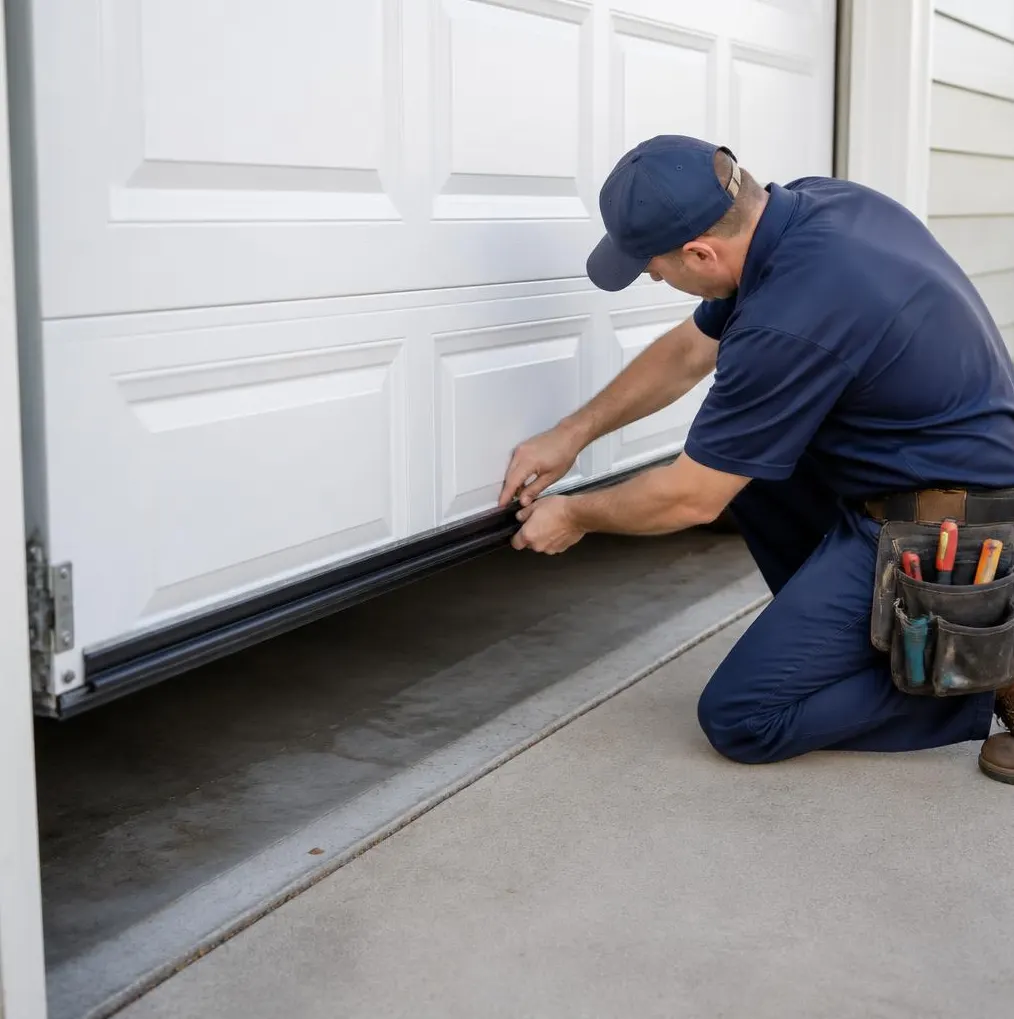
If your garage door is slow to open or feels glued to the slab on a chilly morning, nine times out of ten it's condensation and thickened lubricant, not actual ice. The exceptions: on the handful of nights Brevard County dips into the high 30s or low 40s with heavy dew, frost really can form along the bottom seal and bond it to the concrete, and older torsion springs can tighten just enough overnight to throw a door's balance off. Both are real, just less common here than up north, so the fix usually looks different than you'd expect.
What You'll Notice
- The door creeps up noticeably slower than usual, or the opener strains and clicks before it moves
- One bottom corner lifts late, like it's peeling off the floor
- The door reverses on its own partway through closing
- The weatherstripping tears or stretches when the door finally breaks free
- The chain or belt seems to slip or skip at the start of the cycle
None of these mean the opener motor is dying. They mean something between the door and the slab, or the door and its hardware, is temporarily working against the system.
What a Technician Checks First
1. The Weatherstripping Along the Bottom
This is the first thing to inspect because it's the most common culprit. Humid Palm Bay air cools overnight and condenses on the garage floor and the rubber seal sitting on it. On the rare cold-snap morning, that moisture can frost just enough to tack the seal to the concrete. The fix is simple: never force the opener through it. Manually release the door, gently pull the seal free by hand, and let it warm up before running the opener again. If the seal is already flattened, cracked, or torn from repeated sticking, it needs to be replaced with a seal rated to shed water rather than hold it, which matters more here than the cold itself.
2. Tracks and Rollers
Next comes the rolling hardware, since salt air and humidity are harder on tracks and rollers in this part of Florida than cold ever is. Rust spots on steel rollers or a film of gunk in the track can make a door feel sluggish regardless of temperature, and cool, damp mornings just make it more obvious. A technician cleans the track, checks for pitting on the rollers, and relubricates with a silicone-based lubricant rather than a petroleum spray, which attracts dust and grit. If rollers are visibly rusted or grinding, swapping them for nylon rollers cuts down on this happening again.
3. Spring Tension and Balance
Metal contracts slightly as it cools, and torsion springs are no exception. A small shift in tension on a cold morning can be enough to make a door feel heavier than normal, especially if the spring was already near the end of its adjustment range. The way to check this is a manual balance test: disconnect the opener, lift the door by hand to waist height, and see if it holds roughly in place. If it drops or shoots up, the spring needs adjustment or replacement. This is not a DIY step. Torsion springs are under enough tension to cause serious injury, and it's one of the most common reasons homeowners call for garage door spring repair rather than handle it themselves.
4. The Opener's Sensors and Settings
If the door reverses before closing, the photo-eye sensors are usually next on the list. Condensation or morning fog on the sensor lenses can make the opener think something is blocking the door, even when nothing is there. Wiping both sensors clean and confirming they're still aligned solves most of these cases. Beyond that, a technician checks the opener's limit and force settings, which can drift over time and become more noticeable once a door is already working harder against a stuck seal or stiff rollers.
5. Chain or Belt Drive Lubrication
Last on the list, because it's the least common cause here, is lubrication that's thickened on the rail the trolley rides along. This matters more in climates with sustained cold, but a long stretch of cooler nights can still gum up a drive that hasn't been serviced in a while. A light cleaning and fresh lubricant usually clears it up.
When to Call Palm Bay Garage Door
If you've freed a stuck seal a few mornings in a row, or the door still feels heavy and uneven after it's warmed up, that's a sign the issue isn't just the weather. Our technicians run a full garage door maintenance and tune-up that covers tracks, rollers, spring balance, and opener settings in one visit, which is the fastest way to catch a spring that's close to failing or a track that's starting to rust out before it leaves you with an off track door repair instead. We show up on time, diagnose it correctly the first time, and explain exactly what's wrong before any work starts.
If your garage door has been sticking, straining, or reversing on you, call Palm Bay Garage Door and we'll get it moving the way it should, no matter what the weather does next.